Hua Hin has more coastline than most visitors get to see. The beaches between the town centre and the quieter bays further south differ considerably in atmosphere, infrastructure and accessibility. Depending on what you’re looking for, it’s worth travelling a little further.
Two beaches in Prachuap Khiri Khan Province also earned official recognition in 2025, as part of the national “Beach Star” programme run by Thailand’s Pollution Control Department. Both sit within easy reach of Hua Hin.
In this article:
- Hua Hin Beach — the main beach
- Khao Takiab Beach — at the foot of Monkey Mountain
- Suan Son Pradipat Beach — the pine forest beach
- Khao Tao — temple, two bays, a fishing village
- Khao Kalok Beach — nationally recognised
- Sam Phraya Beach — inside the national park
1. The Main Beach
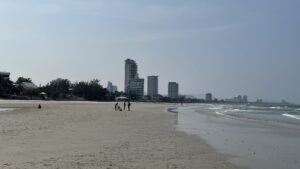
The main beach runs for several kilometres along the town. Light sand, gently sloping water, good facilities. Most hotels in the centre sit within walking distance, and you can rent sun loungers with umbrellas throughout the day.
Tides
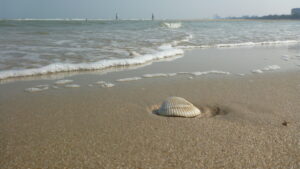
The Gulf of Thailand typically produces just one tide per day. As a result, the width of the beach varies noticeably — depending on the season and time of day, you may find a very wide expanse of sand or a considerably narrower strip. It’s worth checking current tide tables before a long walk.
Prices for food and drink tend to rise towards the main tourist areas. Move further south, however, and it becomes noticeably quieter and more affordable.
Water sports on the main beach
Between the Hua Hin main beach and Khao Takiab, local authority records show ten jet ski mooring points with a combined capacity of 34 boats. Operators run jet skis between 08:00 and 18:00, at a maximum rate of 1,500 Baht per half hour. Banana boats and sofa boats are also available at several points along the beach.
Small vendors move along the beach throughout the day — coconuts, fresh-pressed juices, coconut ice cream, fruit. Thai massage operators work directly on the sand as well.
2. Khao Takiab Beach — At the Foot of Monkey Mountain
About 5 km south of the town centre lies Khao Takiab, named after the hill that rises beside it — the name translates roughly as “Chopstick Hill”. On top of the hill sits Wat Khao Takiab, a Buddhist temple with a golden Buddha statue. The macaque monkeys that live there hold sacred status, and worshippers feed them regularly. The view along the coastline from the summit is wide-reaching.
The beach itself
The beach here runs wider than the main beach — visitors consistently report that more sand stays exposed even at high tide. You can rent sun loungers and umbrellas for around 100 Baht per set, according to Tripadvisor reviews. Restaurants and cafés line the beach and the base of the hill, including Supatra by the Sea and the Anantasila Beach Restaurant. Horse riding on the beach is also on offer.
Kitesurfing at Khao Takiab
Hua Hin Kiteboarding runs a school here with lessons and equipment rental. The kite season runs roughly from November to April, when steady coastal winds deliver reliable conditions.
At weekends, more day-trippers arrive from Bangkok. During the week, however, it is noticeably quieter.
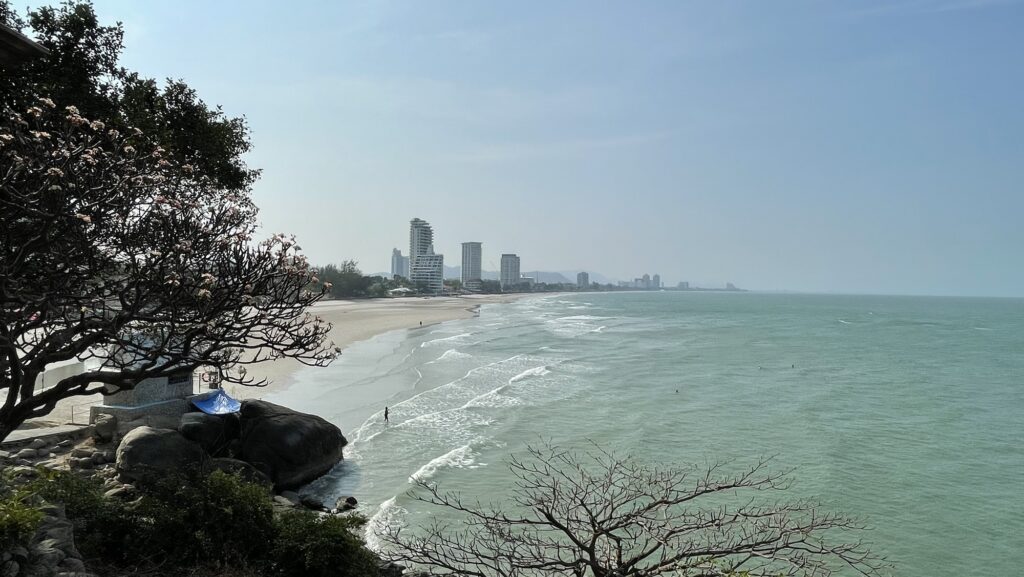
3. Suan Son Pradipat Beach — The Pine Forest Beach
Suan Son translates from Thai as “pine garden” — and the name describes the beach well. Rows of casuarina trees (Casuarina junghuhniana) line the entire shoreline, providing natural shade directly by the water. The beach lies about 9 km south of the town centre, separated from Khao Takiab by the hill of the same name.
Who manages it — and why that matters
The Infantry Centre of the Royal Thai Army manages this beach, which keeps it clean and comparatively quiet. There are no jet skis and no banana boats. Car entry costs 20 Baht. Sun loungers, umbrellas, a restaurant and coffee shops are all available. The beach is open to the public for swimming and walking.
What you can see from here
On the grounds stands the skeleton of a Bryde’s whale found in the area — an unusual detail that surprises many first-time visitors. On a clear day, you can look north towards Khao Takiab and south towards Khao Tao. Several small offshore islands also appear on the horizon — Koh Singto, Koh Sadao and Koh Khi Nok, whose outlines locals say resemble a turtle.
Weekends and public holidays draw more visitors. Notably, the beach is also reachable by weekend excursion train from Bangkok — the line terminates at the small Suan Son Pradipat station, just a few minutes’ walk from the shore.
4. Khao Tao — Temple, Two Bays, a Fishing Village
Khao Tao lies about 14–15 km south of Hua Hin and is not really a single beach. Instead, it forms a small world of its own: two beaches, a temple, a lake and a fishing village. The name means “Turtle Mountain” — sea turtles nested here in the past.
The temple
Wat Tham Khao Tao sits tucked into the rock of the hillside, blending Buddhist and Chinese influences — shrines, statues, a concrete cave passage, and behind it a real small cave. As you climb the path upwards, figures from different religious traditions stand side by side: Kuan Yin, Sakyamuni Buddha, Maharat Buddha images from the Sukhothai period. The large golden seated Buddha at the summit looks out over the Gulf of Thailand. From up there, you can see a beach on either side of the hill: Hat Sai Yai to the north, Hat Sai Noi to the south.
Monks who live at the temple have kept the site uncommericalised.
The beaches and the village
Hat Sai Noi — the small beach behind the temple — is quieter and generally better for swimming, as the water runs slightly deeper. A narrow forest path connects the temple and this beach directly.
Behind the hill, Khao Tao Reservoir offers a quiet lake with a walking path and a pavilion in the middle, particularly still in the early morning.
The fishing village of Baan Khao Tao sits directly by the water. Local boats bring in fresh fish every morning; at weekends, day visitors from Bangkok come specifically to eat seafood here.
Water sports at Khao Tao
The Captain Jack Bar on the beach offers kitesurfing lessons and equipment rental. Kiters rate Khao Tao as one of the better-known spots in the area — conditions peak from November to April, when the northeast coastal winds blow steadily. There is also one jet ski mooring point with a capacity of three boats.
5. Khao Kalok Beach — Nationally Recognised
Khao Kalok sits in Pranburi district, about 30 km south of Hua Hin. The beach takes its name from the distinctive limestone rock that rises directly from the sea — Khao Kalok means “Skull Mountain”. The rock is visible from a distance and gives the bay an unmistakable silhouette.
In 2025, Thailand’s Pollution Control Department assessed 20 tourist beaches under its “Beach Star” programme, using criteria including water quality, natural condition, cleanliness and tourism management. Khao Kalok earned 4.5 out of 5 stars — one of the highest ratings in the country and one of two in Prachuap Khiri Khan Province.
Furthermore, the beach runs wider than many beaches further north, with little development in the surrounding area. Getting there takes around 40 minutes by scooter from Hua Hin, less by car.
6. Sam Phraya Beach — Inside the National Park
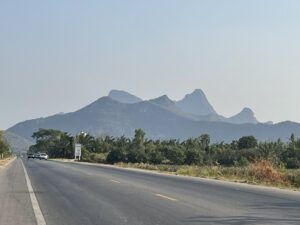
Sam Phraya Beach lies within Khao Sam Roi Yot National Park, about 58–60 km south of Hua Hin. The park’s name translates roughly as “Mountain of Three Hundred Peaks” — limestone formations define the landscape, interspersed with marshes, mangroves and coastline. The Thai government protected the park in 1966, and it now shelters around 355 bird species, many of them migratory.
Sam Phraya also earned 4.5 out of 5 stars in the Beach Star programme 2025. Casuarina trees line the beach, you can rent tents for around 150–225 Baht per night, and a simple restaurant serves food on site. National park entry applies — currently 200–300 Baht for foreign visitors.
What else the park offers
You can rent kayaks within the park for around 150 Baht per person, for paddling through the mangrove forests that stretch east of the limestone range. The area also rewards birdwatchers: the boardwalk over the Thung Sam Roi Yot freshwater marsh passes through one of Thailand’s most species-rich wetland habitats.
Nearby lies Ko Rom Thale, a small offshore island. Local boat operators arrange trips there on request. Similarly, Koh Ling — also known as “Monkey Island” — is home to a colony of long-tailed macaques.
Phraya Nakhon Cave
About 17 km north of the park headquarters stands the park’s most celebrated attraction: two connected sinkholes allow light to fall from above onto the Khuha Kharuehat Pavilion, built in 1890 for a visit by King Chulalongkorn (Rama V). Today, the pavilion serves as the symbol of Prachuap Khiri Khan Province. You reach it via Laem Sala Beach by boat or on foot over the hill.
Other caves
Kaeo Cave and Sai Cave are both filled with stalactites and stalagmites, reachable via rocky trails. Both offer a somewhat wilder outing than the more visited Phraya Nakhon Cave — worth considering if you want to avoid the main crowds.
At a Glance
| Beach | Atmosphere | Facilities | Distance from centre |
|---|---|---|---|
| Hua Hin Beach | Busy, urban | Very good | Town centre |
| Khao Takiab | Quieter, temple nearby | Good | ~5 km |
| Suan Son Pradipat | Quiet, pine forest, military site | Basic | ~9 km |
| Khao Tao | Remote, temple, fishing village | Basic | ~14 km |
| Khao Kalok | Natural, little development | Basic | ~30 km |
| Sam Phraya | National park, camping, no crowds | Minimal | ~60 km |
Notes
Getting between beaches
A scooter gives you the most flexibility — rental rates run around 200–300 Baht per day. For Khao Kalok and Sam Phraya, a car or pre-arranged transfer is advisable, since getting back by public transport can be difficult. Suan Son Pradipat is also reachable by weekend excursion train from Bangkok.
Tides
The Gulf of Thailand typically has just one tide per day. Beach width varies considerably by season. You can find current information at tidetime.org under the entry for Hua Hin.
Jellyfish
Jellyfish appear from July to October. Most main beaches post warning signs during this period.
National park entry
Sam Phraya Beach and Phraya Nakhon Cave both fall within Khao Sam Roi Yot National Park. An entry fee applies.